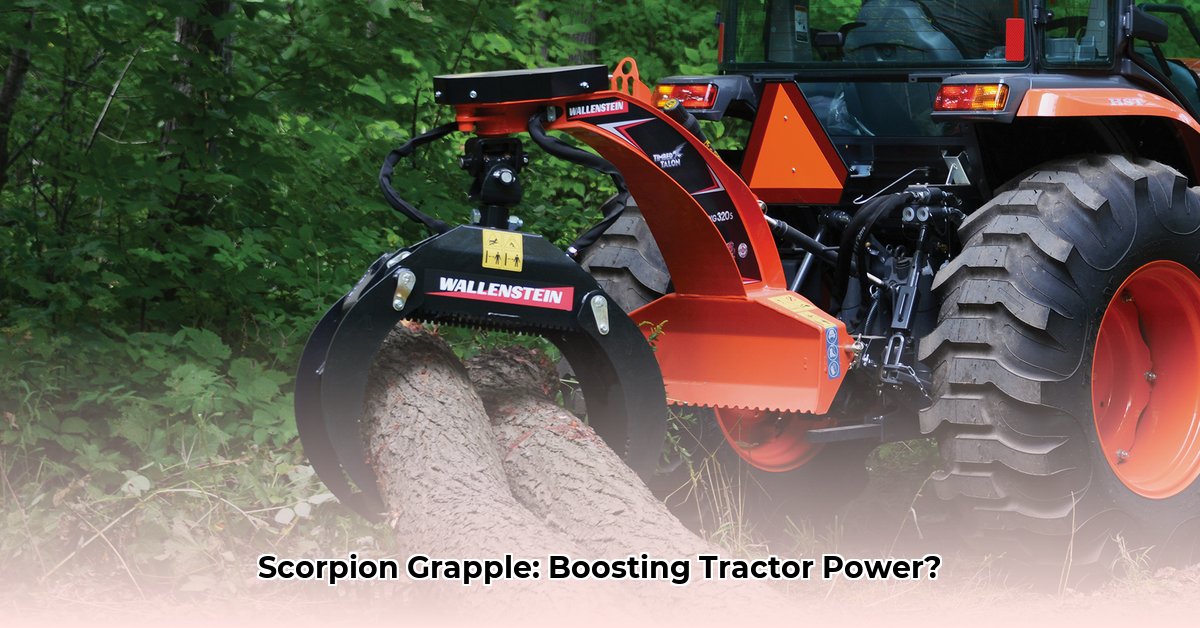
Tractor Log Grapple: A Deep Dive into the Uniforest Scorpion
Selecting the right equipment for logging operations significantly impacts productivity and efficiency. The Uniforest Scorpion tractor log grapple, offered in 1300SB and 1800SB models, promises improvements in both areas. This review provides a detailed analysis of its capabilities, limitations, and economic viability within the context of sustainable forestry practices. For more information on compact tractors with grapples, see this helpful resource.
Clamping Power and Versatility: The Scorpion's Grip
The Scorpion grapples boast a substantial 21,000-pound clamping force. This power enables handling of diverse log sizes, from small saplings to large trunks. Its design incorporates a wide opening (70 inches) that reduces to a mere 2 inches for secure gripping. The 360-degree rotation allows for precise log maneuvering in confined spaces. Its compatibility with 3-point hitches and quick attachment systems ensures seamless integration with various tractors and skid steers. This adaptability extends its use beyond logs to include brush and debris removal.
Built to Endure: Construction and Durability
The Scorpion's robust construction is evident in its use of high-quality, corrosion-resistant materials. The inclusion of lubrication-free slide bushings minimizes maintenance, reducing downtime and long-term operational costs. While this suggests a strong return on investment, further data on actual maintenance intervals and repair costs would strengthen this assertion.
Performance in the Field: The Need for More Data
While the Scorpion's capabilities are impressive, a comprehensive assessment requires more real-world performance data. Critical missing information includes metrics such as logs processed per hour, fuel consumption rates, and typical maintenance intervals. This data is essential for evaluating its efficiency and economic viability within sustainable forestry operations. Independent testing and user feedback are crucial for filling these gaps. How can we accurately assess its long-term cost-effectiveness without such crucial metrics?
Environmental Impact: Sustainability in Action?
Sustainable logging practices require careful consideration of environmental impact. To fully assess the Scorpion’s environmental footprint, further research is necessary to accurately determine its noise pollution level, fuel efficiency, and the end-of-life recyclability of its components. The impact on soil compaction and forest regeneration also warrants investigation. These factors are integral to responsible environmental stewardship.
The Economic Picture: Cost vs. Benefit
The Scorpion represents a substantial initial investment. A comprehensive lifecycle cost analysis is crucial for evaluating its long-term economic viability. This analysis must include maintenance costs, operational efficiency, grapple lifespan, and the potential savings in labor costs due to increased productivity. While increased efficiency promises potential cost savings, rigorous data is needed to quantify these benefits. How can we accurately predict the return on investment without a detailed lifecycle cost analysis?
Comparing the Scorpion: A Broader Perspective
A comparative analysis against competing log grapples would further illuminate the Scorpion's strengths and weaknesses, highlighting its unique advantages and areas for potential improvement within the market.
Conclusion: A Powerful Tool with Unanswered Questions
The Uniforest Scorpion grapple shows significant potential for optimizing logging efficiency. Its strength and versatility are compelling. However, the absence of comprehensive performance data, environmental impact assessments, and detailed lifecycle cost analyses prevents a definitive evaluation of its overall value. Further research and independent testing are crucial for fully understanding its role in sustainable forestry and its economic viability for diverse operators. The grapple's success hinges on independent verification of its claimed benefits.
How to Calculate Lifecycle Cost of Uniforest Scorpion Grapple
Determining the lifecycle cost of the Uniforest Scorpion requires a systematic approach. This involves comprehensively assessing all costs associated with ownership and operation throughout its lifespan.
Key Components of Lifecycle Cost Calculation
- Initial Purchase Price: Include delivery and installation costs.
- Maintenance: Project annual maintenance, repair, and parts replacement costs.
- Fuel Consumption: Establish fuel consumption rates based on manufacturer specifications or field testing.
- Depreciation: Utilize a suitable depreciation method (straight-line or accelerated) to account for value loss over time.
- Operator Costs: Factor in labor costs, including wages, benefits, and training.
The accurate projection of these costs requires detailed data, currently unavailable for the Uniforest Scorpion. Consequently, further research and field testing are necessary for precise lifecycle cost calculations. Without detailed operational data, any economic assessment remains speculative.